In the world of CNC machining, aluminum is the bread and butter. But every engineer eventually hits the crossroads: do you stick with the reliable, “cheap” 6061-T6, or do you shell out the premium for the “aerospace-grade” 7075-T6?
If you ask a machinist, they’ll tell you that 7075 is a dream to cut, but if you ask a procurement officer, they’ll probably point at the budget and weep. Let’s break down when you should actually hit the “buy” button on that expensive 7xxx series alloy.
The Tale of the Tape: Mechanical Realities
The primary reason anyone considers 7075 is raw, unadulterated strength. When you compare the yield strengths, the gap is staggering:
- 6061-T6 Yield Strength: ≈276 MPa(40,000psi)
- 7075-T6 Yield Strength: ≈503 MPa(73,000psi)
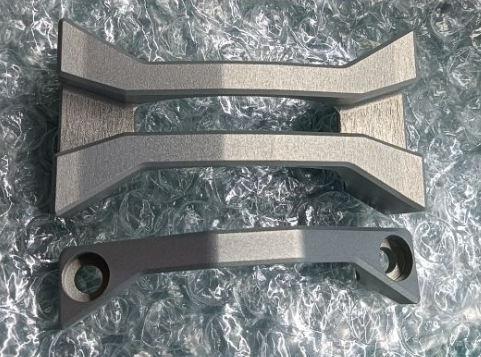
Essentially, 7075-T6 is nearly twice as strong. In high-stress applications—think drone arms, suspension links, or threaded holes that will see high torque—7075 is your insurance policy against permanent deformation.
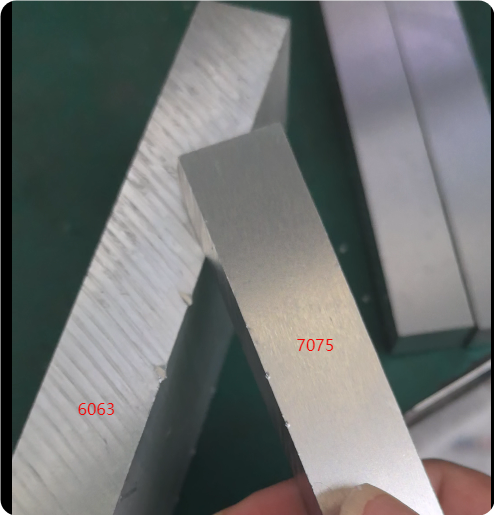
3 Reasons to Splurge on 7075-T6
- Thread Strength and Longevity: If your part features small, fine threads (like M3 or 4-40) that will be frequently tightened and loosened, 6061’s “gummy” nature may lead to stripped threads over time. 7075’s hardness ( 150 Brinell vs 95for 6061 )makes it behave more like steel in these scenarios.
- The “Race Car” Rule: As one Reddit user famously put it: “The race car people make it out of 7075 if the one they made out of 6061 broke.” If your Finite Element Analysis (FEA) shows a safety factor of less than 1.5 with 6061, it’s time to upgrade.
- Machinability for Tight Tolerances: Because 7075 is harder, it produces crisp, clean chips rather than long, stringy birds-nests. If you are doing deep-hole drilling or need a mirror-flat finish straight off the mill, 7075 is often easier to keep within a ± 0.01 mm tolerance.
3 Reasons to Stick with 6061-T6
- You Need to Weld It: If your assembly involves a TIG welder, stop right now. 7075 is notoriously difficult to weld and prone to “hot cracking.” 6061 is the gold standard for weldability.
- Corrosion is a Constant Threat: 7075 contains significant amounts of zinc and copper, which makes it susceptible to Stress Corrosion Cracking (SCC) in marine or high-moisture environments. 6061 is far more “set it and forget it” in the elements.
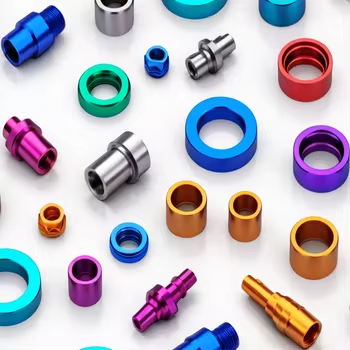
- Aesthetics and Anodizing: If your part needs to look “Gucci” in a bright red or blue finish, 6061 takes Type II and Type III anodizing much more consistently. 7075 can often come out looking slightly yellowish or “muddy” due to its alloy composition.
Quick Comparison Table
| Feature | 6061-T6 | 7075-T6 | Winner |
| Material Cost | 1.0* (Base) | 2.0* to 3.0* | 6061 (Value) |
| Yield Strength | 276 MPa | 503 MPa | 7075 (Strength) |
| Weldability | Excellent | Poor (Avoid) | 6061 |
| Hardness (HB) | 95 | 150 | 7075 (Wear) |
| Machinability | Good (Gummy) | Excellent (Crisp) | 7075 (Finish) |
Pro-Tip from the Shop Floor: If you’re prototyping, start with 6061. It’s cheaper to “mess up” on. Once the design is locked in and you’ve confirmed that weight or stress is an issue, move to 7075 for the final production run.
The Bottom Line
Don’t pay the “7075 tax” just because it sounds cooler. Use 6061 for 90% of your projects—it’s cheaper, easier to find, and resists the weather better. Reserve the 7075 for the high-stress “critical” components where failing isn’t just an inconvenience, it’s a disaster.