You’ve designed a part. You sent it to three CNC shops and received three wildly different quotes—and you’re not sure why.
If you’re sourcing machined parts, you don’t need another beginner’s guide to CNC. You need a framework to evaluate suppliers, understand cost drivers, and make confident decisions—whether you’re prototyping or scaling to production.
That’s exactly what this guide delivers.
We’ll cover:
- What CNC manufacturing is (briefly—you already know the basics)
- How material choice affects cost and lead time
- The manufacturing process—where quality is made or lost
- Industry-specific requirements (aerospace, medical, automotive, robotics)
- CNC vs. 3D printing vs. injection molding: a decision framework
- How to evaluate a CNC partner (the part most guides skip)
- A real-world case study with hard numbers
By the end, you’ll know exactly what to look for—and what to ask—when sourcing CNC machined parts.
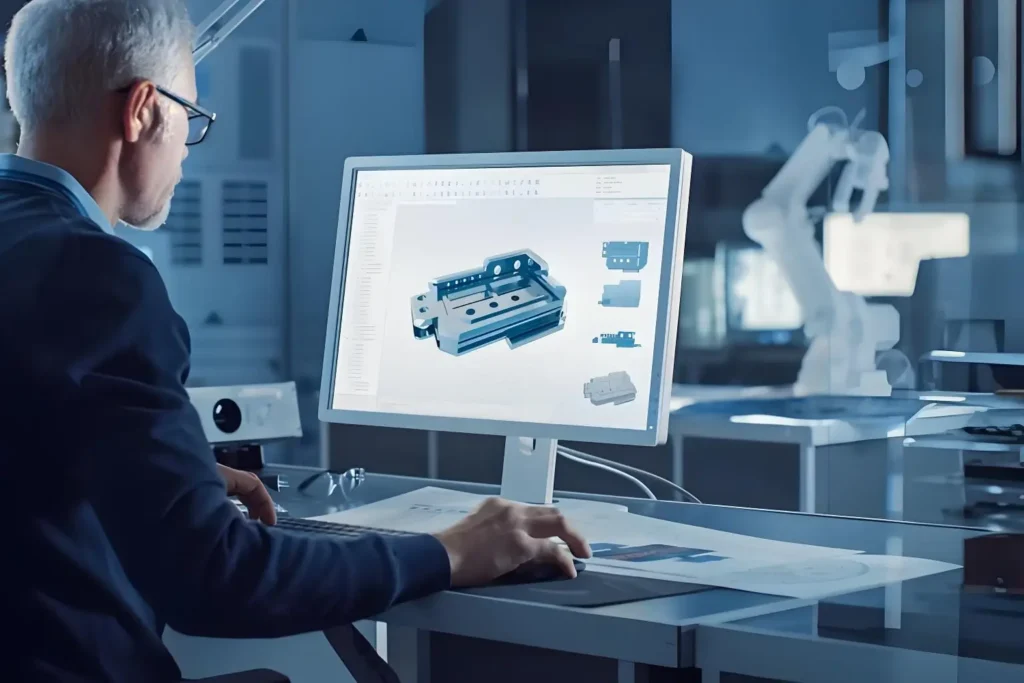
CNC Manufacturing in a Nutshell
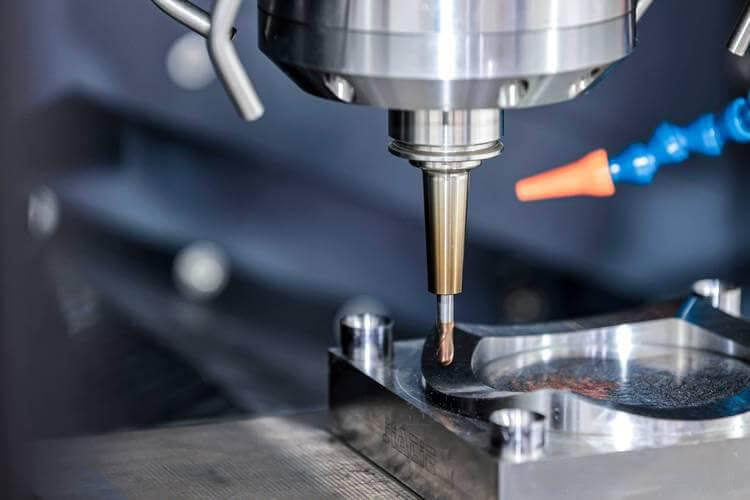
CNC (Computer Numerical Control) machining uses pre-programmed software to control cutting tools. The process starts with a 3D CAD model, which is converted into machine-readable G-code. The CNC machine then removes material from a solid block to create the final part.
Why it matters:
- Precision: Tolerances down to ±0.005mm (±0.0002″) are achievable.
- Repeatability: Every part matches the first—critical for production runs.
- Material versatility: Works with metals, plastics, and composites.
- Speed: Once programmed, machines run unattended, reducing lead times.
If you’re already familiar with these basics, feel free to skip ahead to Part 6 where we dive into supplier evaluation.
Material Selection
The material you choose directly impacts machining cost, lead time, and part performance. Here’s how to think about it.
Common Metals
| Material | Properties | Machining Considerations |
|---|---|---|
| Aluminum (6061, 7075) | Lightweight, corrosion-resistant, easy to machine | Fast cutting, low tool wear; 7075 is stronger but more expensive |
| Stainless Steel (304, 316, 17-4) | High strength, corrosion-resistant | Work-hardens; requires rigid setups and sharp tools |
| Titanium (Grade 5) | Exceptional strength-to-weight ratio, biocompatible | Difficult to machine; needs slow speeds, high-pressure coolant |
| Brass / Copper | Good conductivity, corrosion-resistant | Easy to machine; copper can be gummy without proper tools |
| Tool Steel (P20, H13) | High hardness, wear-resistant | Slow machining, high tool wear; typically for molds and dies |
Common Plastics
| Material | Properties | Machining Considerations |
|---|---|---|
| ABS | Tough, impact-resistant | Easy to machine; used for prototypes and enclosures |
| POM (Delrin) | High stiffness, low friction | Excellent dimensional stability; ideal for gears and moving parts |
| Nylon | Strong, chemical-resistant | Can absorb moisture; requires sharp tools to avoid melting |
| PEEK | High temperature and chemical resistance | Expensive but machines well; used in aerospace and medical implants |
| Polycarbonate | Transparent, impact-resistant | Requires careful toolpath to avoid stress cracking |
Pro tip: When sourcing, ask your supplier if they have experience with your specific material. A shop that routinely machines titanium or PEEK will have optimized tooling and parameters—saving you time and cost.
The Manufacturing Process – Where Quality Is Made or Lost
Understanding the steps helps you identify where a shop’s expertise matters most.
- Design (CAD): Your 3D model defines geometry, tolerances, and material. Small design changes can dramatically affect cost (see Part 6 for DFM tips).
- Programming (CAM): G-code is generated. Experienced programmers optimize toolpaths to reduce cycle time and improve surface finish.
- Setup: The raw material is fixtured. Poor fixturing leads to vibration, deflection, and out-of-tolerance parts.
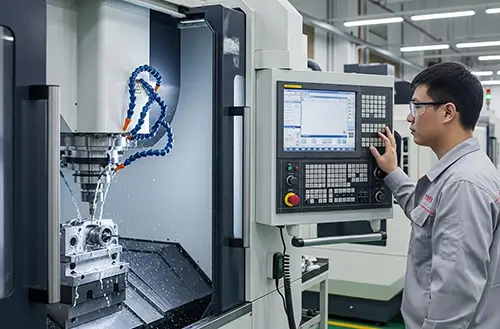
- Machining: The machine runs. In-process checks (by the operator) catch issues early.
- Inspection: Parts are measured using calipers, micrometers, or CMM (coordinate measuring machine). A shop with in-house CMM can provide full inspection reports.
- Finishing: Secondary operations like anodizing, bead blasting, or heat treatment are applied as needed.
What separates good shops from average ones? It’s not just equipment—it’s the discipline in between: in-process inspection, tool management, and clear communication when issues arise.
Industry Applications – What Each Sector Requires
Different industries have different priorities. Here’s how they affect CNC manufacturing.
- Aerospace: Requires AS9100 certification, strict material traceability, and tight tolerances. Aluminum, titanium, and high-temperature alloys are common.
- Medical: Demands biocompatible materials (titanium, PEEK, 316 stainless), clean manufacturing, and full documentation. ISO 13485 is often required.
- Automotive: Focuses on cost efficiency at medium to high volumes. Aluminum, steel, and engineering plastics are typical.
- Robotics & Automation: Needs complex geometries, quick iteration, and high reliability. 4‑axis and 5‑axis machining are frequently used.
- Semiconductor: Requires ultra-clean parts, tight tolerances, and materials like PEEK and aluminum. Vacuum-compatible components are common.
When evaluating a CNC partner, ask if they have experience in your industry—it often means they already understand your quality and documentation needs.
CNC vs. Alternative Manufacturing Methods
Not every part should be machined. Here’s how CNC compares to other common processes.
| Process | Best For | Strengths | Limitations |
|---|---|---|---|
| CNC Machining | Prototypes, low-to-medium volume, tight tolerances | Wide material range, high accuracy, no tooling cost | Higher per-part cost at very high volumes |
| 3D Printing | Rapid prototyping, complex geometries | No setup cost, fast iteration | Limited materials, lower strength, poor surface finish |
| Injection Molding | High-volume plastic parts | Very low per-part cost at scale | High upfront tooling cost ($5k–$50k+), design changes are expensive |
| Laser/Waterjet Cutting | Flat sheet parts, quick turnaround | Fast, minimal setup | Limited to 2D shapes, no complex 3D features |
Decision rule of thumb:
- Under 100 parts → CNC or 3D printing
- 100–5,000 parts → CNC is often most cost-effective
- Above 5,000 parts → consider injection molding (for plastics) or high-volume CNC with optimized fixturing
How to Evaluate a CNC Partner
You’ve got quotes. Now what? Use these four criteria to cut through the noise.
1. Equipment Capability
Not all CNC shops are created equal. Ask:
- What types of machines do you have? (3‑axis, 4‑axis, 5‑axis?)
- What’s the maximum part size you can handle?
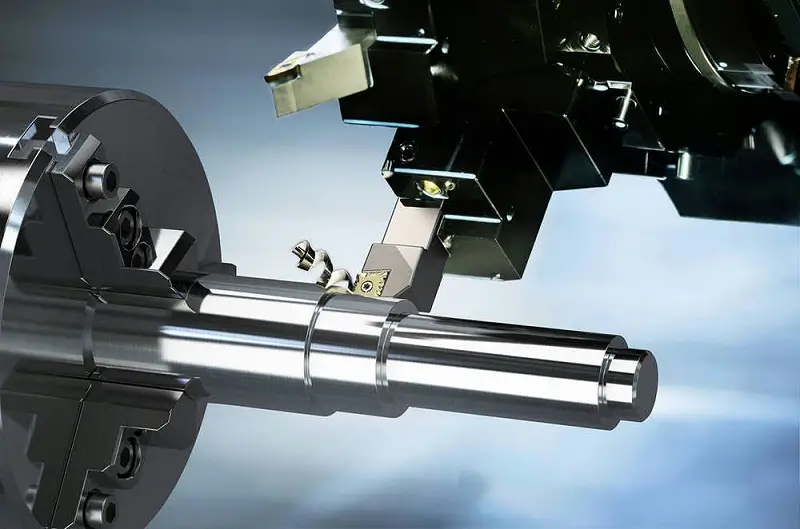
- Do you have in-house turning (CNC lathes) for rotational parts?
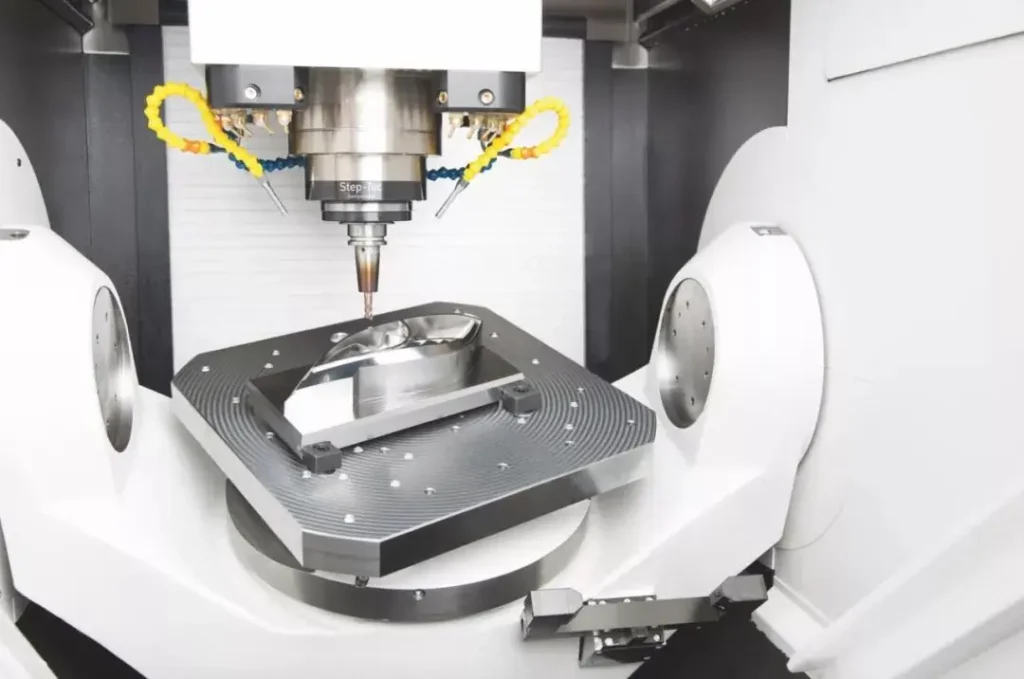
Why it matters: A shop with 4‑axis or 5‑axis machines can often reduce setups, improve accuracy, and lower overall cost for complex parts.
2. Material Expertise
Ask if they’ve machined your specific material before. Titanium, PEEK, and hardened steels require specialized tooling and parameter knowledge. A shop that claims “we can machine anything” without examples may be overpromising.
3. Quality System
Look for certifications like ISO 9001 (minimum) or AS9100 (aerospace). Ask if they have in-house inspection (CMM) and whether they provide inspection reports. Shops that take quality seriously will happily share this information.
4. Communication and Transparency
How quickly do they respond? Do they ask clarifying questions about your design? Do they provide clear, detailed quotes? A partner who communicates well during quoting will likely keep you informed during production.
How MachCNCMaster fits this framework: We operate 40+ 4‑axis machining centers and 8 CNC lathes—one of the largest fleets in China. We regularly machine aluminum, stainless steel, titanium, PEEK, and engineering plastics. We’re ISO 9001:2015 certified, with in-house CMM inspection and full reporting. And we communicate in English, with clear quotes and regular updates.
Case Study – From 3‑Axis to 4‑Axis, 32% Cost Reduction
Customer: A US‑based drone manufacturer.
Part: Gimbal mount, 120×80×60mm.
Challenge: The part required machining on three faces with positional tolerances between features. The customer’s previous supplier used three separate 3‑axis setups, resulting in inconsistent alignment and a yield rate of only 82%.
Our approach: We proposed moving to a 4‑axis setup. By mounting the part on a rotary fixture, we machined all features in a single setup—eliminating repositioning errors.
Results:
- Yield rate increased to 98%.
- Cost per part dropped from $78 to $53—a 32% reduction.
- Lead time shortened from 3 weeks to 12 days.
The customer has since placed three additional orders with us.
Your Next Step – Get a Free DFM Analysis
If you have a part in mind—whether it’s a prototype or a production run—we’ll give you actionable feedback, no strings attached.
Send us your CAD file (STEP or IGES) and we’ll provide:
- A manufacturability review (DFM analysis) with suggestions to reduce cost and improve quality
- A detailed quote with clear cost breakdown
- Estimated lead time
It’s free, and there’s no obligation to place an order. You’ll walk away knowing exactly what your part needs.
About MachCNCMaster: We’re a precision CNC machining shop based in China, specializing in complex parts across aluminum, stainless steel, titanium, and PEEK. With 40+ 4‑axis machining centers, 8 CNC lathes, and ISO 9001 certification, we serve aerospace, medical, automotive, and robotics clients worldwide. We believe in clear communication, fair pricing, and quality you can trust.