Nylon is the “workhorse” of the industrial world. From high-wear bushings to silent gears and rollers, its combination of toughness and low friction makes it irreplaceable. However, in a CNC shop, Nylon is notorious for being a “finicky” material. If you treat it like aluminum, you’ll end up with a melted plastic mess and dimensions that “wander” overnight.
Here is how the pros handle Nylon to ensure precision and a mirror-like finish.
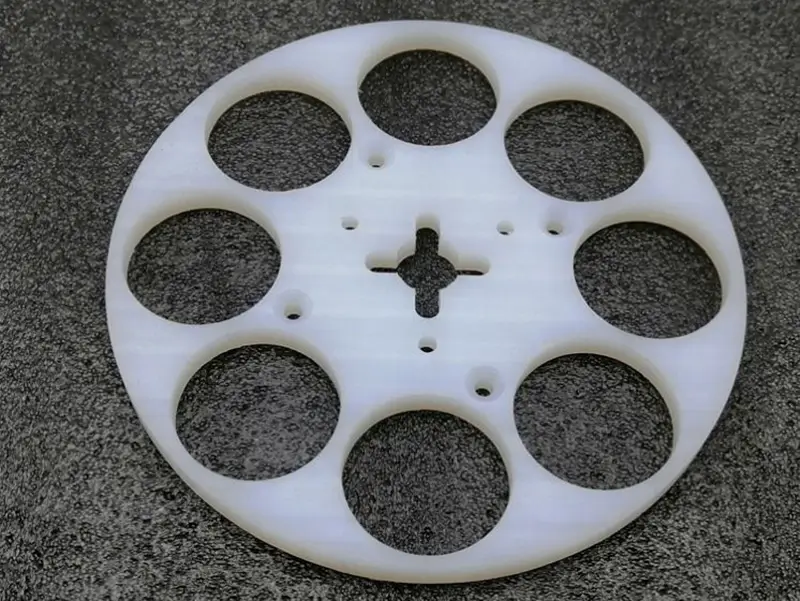
1. The Tooling Secret: Think “Knife,” Not “Chisel”
Most metal-cutting tools have a slightly rounded edge (honed) to increase tool life. For Nylon, this is your enemy. A dull edge will push the material rather than cut it, creating heat and friction.
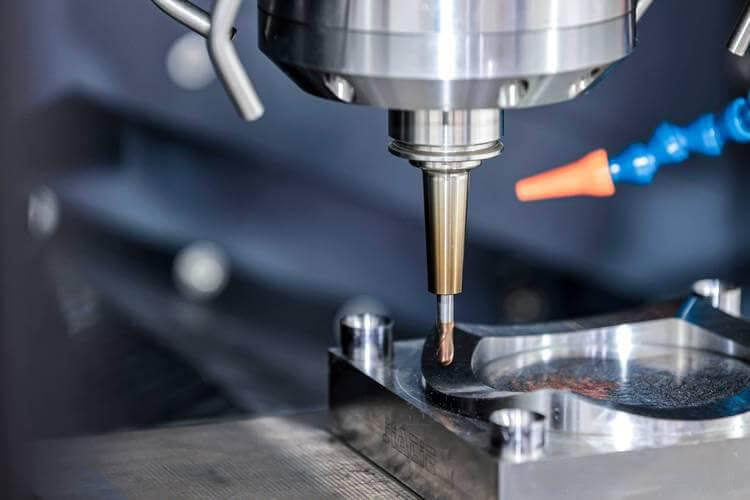
The Pro Tip: Use High-Positive Rake tooling. Specifically, “Up-shear” endmills designed for aluminum are excellent because they have polished flutes that prevent the “gummy” chips from sticking. Many old-school machinists swear by freshly ground HSS tools because they can achieve a sharper edge than carbide.
2. Managing the “Birdnest”
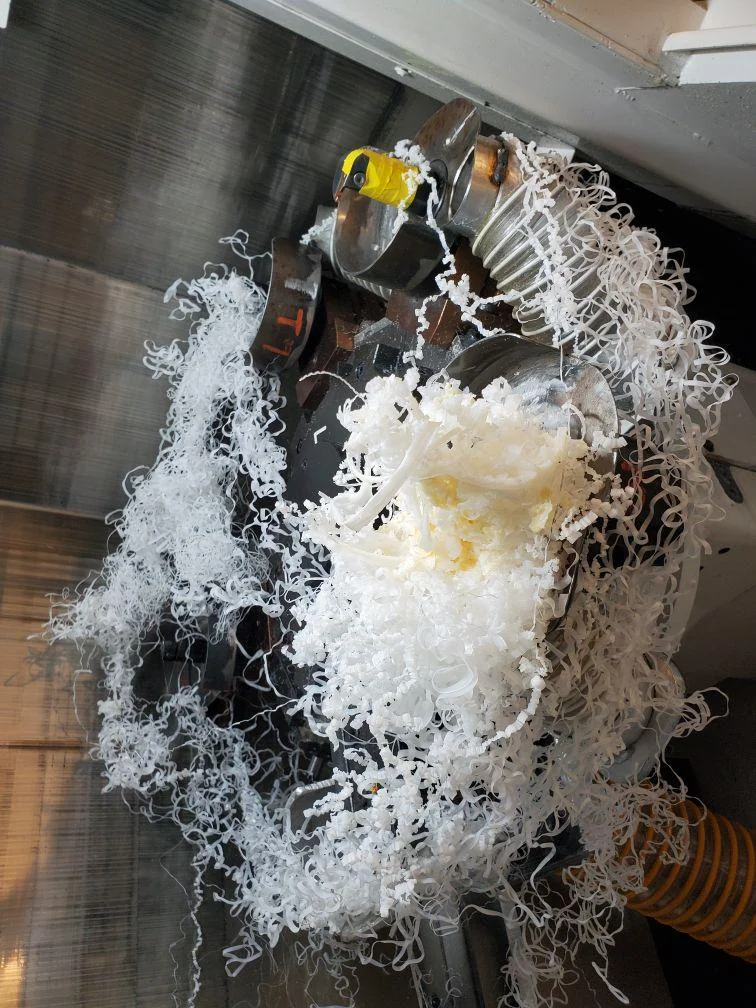
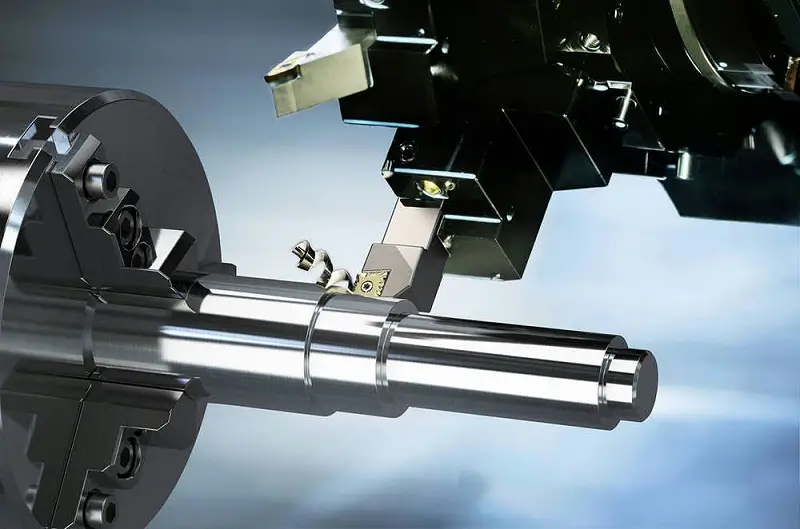
Nylon is famous for “birdnesting”—creating long, stringy chips that wrap around the tool.
To combat this:
- Keep the Feed Rate High: You want to “peel” the material away. If your feed is too slow, the tool just rubs, generates heat, and melts the plastic.
- Program Smart: Use “chip-breaking” cycles or frequent retracts (peck drilling) to break those long ribbons before they become a safety hazard for your spindle.
3. The “Moving” Target: Heat and Moisture
Nylon is one of the most “unstable” plastics in the shop for two reasons:
- Thermal Expansion: It expands roughly 10 times more than steel when heated. If you measure your part while it’s warm from the mill, it will be undersized by the time it reaches the customer.
- Moisture Absorption: Nylon 6/6 can grow in size just by sitting in a humid room.
The Strategy: Use an Air Blast instead of heavy liquid coolant if possible. If you must use coolant, ensure it is consistent. Always let the part “rest” for a few hours before taking final critical measurements.
4. Workholding: The “Light Touch”
Because Nylon is elastic, it is very easy to deform in a vise. If you tighten the vise to 100 ft-lbs, you are essentially pre-loading a spring. You might machine a perfect circle, but the moment you open the vise jaws, the material relaxes and your circle becomes an ellipse.
The Solution: Use Soft Jaws that wrap around more of the part’s surface area to distribute the pressure. “Snug” is the goal, not “Crushed.”
5. The Final Finish: Dealing with Fuzz
Even with the best tools, Nylon tends to leave “fuzz” or burrs at the exit of a cut.
The Pro Tip: If you have a high-volume run, some shops use Cryogenic Deburring (freezing the parts so the burrs become brittle and snap off). For manual deburring, a specialized plastic deburring blade or even a sharp wood chisel works better than a standard metal deburring tool.
Summary Checklist for Success:
- Tooling: Polished carbide, high-shear, razor-sharp.
- Speed: High, but watch for melting.
- Feed: Aggressive to carry heat away in the chip.
- Cooling: Air blast is king; avoid “soaking” the part in water-based coolant if moisture-growth is a concern.
- Measurement: Measure cold, and account for 0.5% – 1% shrinkage/growth depending on the grade.
Nylon doesn’t have to be a nightmare. By respecting its elasticity and thermal properties, you can produce parts that are as precise as they are durable.