When developing a new product, choosing the right manufacturing process can directly impact quality, cost, and time to market.
CNC machining has become one of the most widely used manufacturing solutions for producing high-precision metal and plastic components across industries including automotive, aerospace, medical, robotics, electronics, and industrial equipment.
Unlike traditional machining methods, modern CNC machining combines advanced software, automated machine tools, and skilled manufacturing expertise to produce complex parts with excellent accuracy and repeatability.
At xinrico, we provide custom CNC machining services for prototypes, low-volume production, and repeat manufacturing projects. Our capabilities include CNC milling, CNC turning, precision machining, surface finishing, and quality inspection to help customers transform designs into reliable production parts.
What Is CNC Machining?
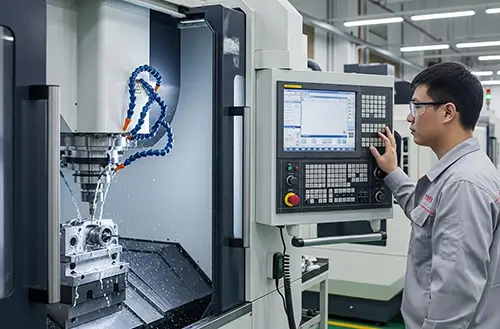
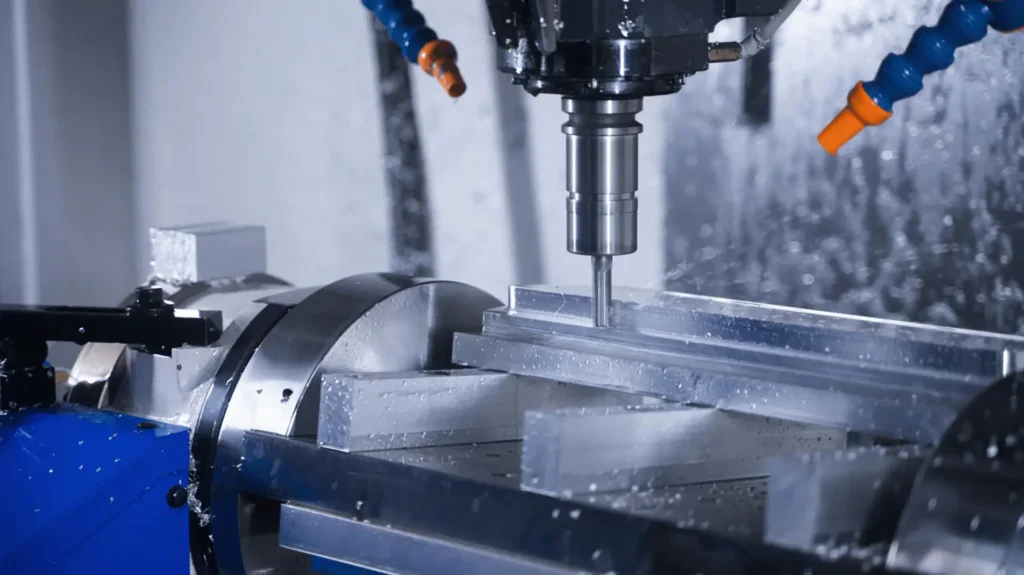
CNC machining (Computer Numerical Control machining) is a subtractive manufacturing process that uses computer-controlled machine tools to remove material from a solid workpiece and create a finished component.
The process begins with a digital CAD model. Engineers convert the design into machine instructions through CAM software. The CNC machine then automatically controls cutting tools to remove material according to programmed toolpaths.
Common CNC machining equipment includes:
- CNC milling machines
- CNC turning centers
- 5-axis machining centers
- Swiss-type CNC machines
- CNC grinders
Compared with manual machining, CNC technology provides:
- Higher precision
- Better repeatability
- Faster production
- Complex geometry capability
- Consistent quality
How Does CNC Machining Work?
A typical CNC machining process includes several stages.
1. Design and Engineering Review
The process begins with a 3D CAD model or engineering drawing.
Before manufacturing, experienced machinists review:
- Part geometry
- Material selection
- Required tolerances
- Surface finish requirements
- Manufacturing challenges
This design-for-manufacturing (DFM) review helps reduce unnecessary costs and prevent production issues.
2. CNC Programming
Engineers create machining programs using CAM software.
Programming determines:
- Cutting tools
- Tool paths
- Cutting speeds
- Feed rates
- Machining sequences
Proper programming is critical for achieving accuracy and improving efficiency.
3. Material Preparation
Common CNC machining materials include:
Metals
- Aluminum
- Stainless steel
- Carbon steel
- Brass
- Copper
- Titanium
- Inconel
Plastics
- POM (Delrin)
- Nylon
- PEEK
- ABS
- PTFE
Material selection depends on:
- Strength requirements
- Weight
- Temperature resistance
- Chemical resistance
- Cost
4. CNC Machining
During machining, cutting tools remove material through controlled movements.
Depending on part requirements, manufacturers may use:
- Milling
- Turning
- Drilling
- Boring
- Threading
- Reaming
- Surface finishing
Advanced CNC machines can create complex geometries that would be difficult or impossible using conventional methods.
5. Inspection and Quality Control
Precision parts require reliable inspection processes.
Quality control may include:
- Digital calipers
- Micrometers
- Height gauges
- Optical measurement systems
- Coordinate Measuring Machines (CMM)
Inspection verifies:
- Dimensional accuracy
- Geometric tolerances
- Surface finish
- Assembly requirements
CNC Machining Processes
CNC Milling Services
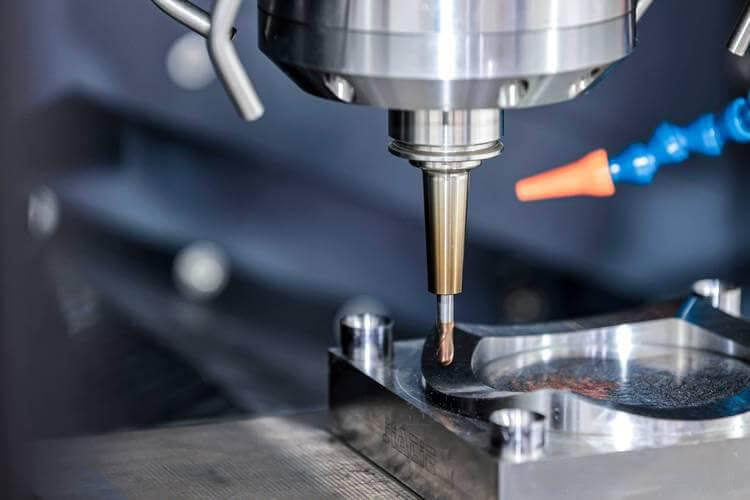
CNC milling uses rotating cutting tools to remove material from a stationary workpiece.
It is ideal for:
- Housings
- Brackets
- Plates
- Fixtures
- Complex mechanical components
Common milling capabilities:
- 3-axis milling
- 4-axis machining
- 5-axis machining
Applications:
- Aerospace components
- Automotive parts
- Robotics components
- Industrial equipment
CNC Turning Services
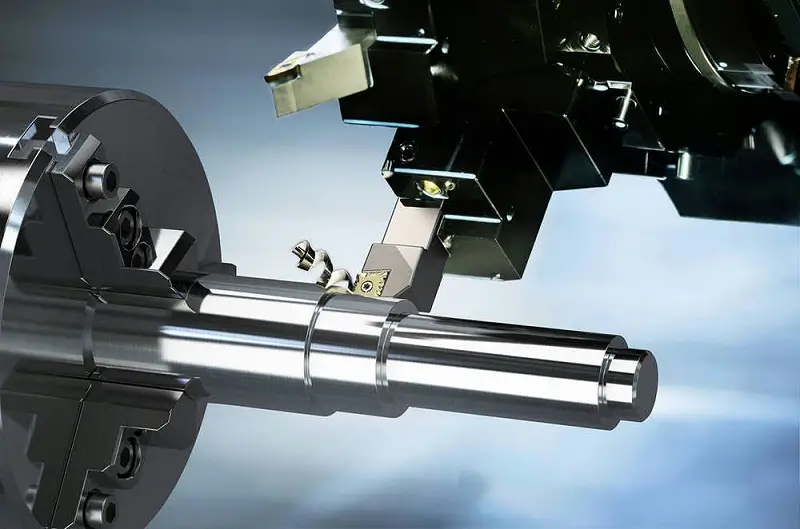
CNC turning is designed for cylindrical components where the workpiece rotates while cutting tools remove material.
Typical turned parts include:
- Shafts
- Bushings
- Sleeves
- Pins
- Connectors
- Sensor housings
CNC turning provides excellent accuracy for round components.
5-Axis CNC Machining
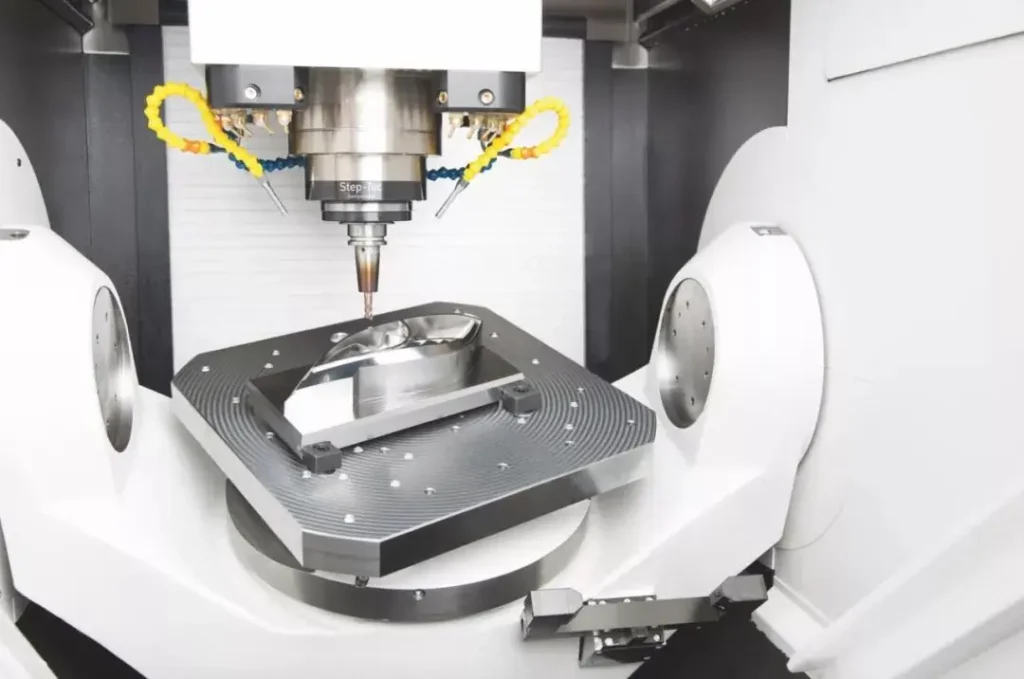
5-axis machining allows cutting tools to approach a part from multiple angles without repositioning.
Advantages:
- Complex geometries
- Fewer setups
- Better surface finish
- Higher accuracy
Common applications:
- Aerospace components
- Medical implants
- High-performance automotive parts
CNC Machining Materials
Aluminum CNC Machining
Aluminum is one of the most popular CNC machining materials because it offers:
- Lightweight properties
- Excellent machinability
- Corrosion resistance
- Good surface finish
Common grades:
6061 Aluminum
Used for:
- Brackets
- Housings
- Structural components
7075 Aluminum
Used for:
- Aerospace components
- High-strength applications
Stainless Steel CNC Machining
Stainless steel provides:
- Corrosion resistance
- Strength
- Durability
Common applications:
- Medical equipment
- Food machinery
- Industrial components
Challenges include:
- Higher cutting forces
- Tool wear
- Work hardening
Experienced machining processes are required to achieve consistent results.
Titanium CNC Machining
Titanium is valued for:
- High strength-to-weight ratio
- Corrosion resistance
- Biocompatibility
Applications:
- Aerospace parts
- Medical implants
- Performance components
Because titanium generates heat during cutting, it requires optimized tooling and machining parameters.
CNC Machining Tolerances
Tolerance requirements depend on:
- Material
- Part size
- Geometry
- Machine capability
- Inspection method
Typical CNC machining tolerances:
| Requirement | Typical Range |
|---|---|
| Standard machining | ±0.05 mm |
| Precision machining | ±0.01–0.02 mm |
| High precision applications | ±0.005 mm or tighter |
For critical dimensions, manufacturers may use:
- GD&T drawings
- CMM inspection
- First Article Inspection (FAI)
Surface Finishing Options for CNC Parts
After machining, parts can receive additional finishing processes.
Common options include:
Anodizing
Used for aluminum parts.
Benefits:
- Corrosion resistance
- Improved appearance
- Increased surface hardness
Powder Coating
Provides:
- Protective coating
- Color options
- Durable finish
Electropolishing
Common for stainless steel.
Benefits:
- Smooth surface
- Improved corrosion resistance
Bead Blasting
Creates:
- Uniform matte finish
- Improved cosmetic appearance
Industries Using CNC Machining Services
Automotive Manufacturing
Applications:
- Engine components
- Transmission parts
- Suspension components
- Prototype parts
Aerospace Industry
Applications:
- Lightweight brackets
- Structural components
- Aircraft fittings
Requirements:
- Tight tolerances
- Material traceability
- Quality documentation
Medical Industry
Applications:
- Surgical instruments
- Medical device components
- Precision tools
Requirements:
- High accuracy
- Clean manufacturing
- Material control
Robotics and Automation
Applications:
- Robot joints
- End effectors
- Mounting components
Electronics
Applications:
- Aluminum housings
- Heat sinks
- Connector components
CNC Machining vs Other Manufacturing Methods
| Process | Best For |
|---|---|
| CNC Machining | Precision, prototypes, low-medium volume |
| Injection Molding | High-volume plastic parts |
| Die Casting | Large-volume metal parts |
| 3D Printing | Rapid prototypes and complex shapes |
| Sheet Metal Fabrication | Enclosures and panels |
CNC machining is especially valuable when accuracy, flexibility, and material choice are more important than minimum unit cost.
How to Choose a CNC Machining Manufacturer
Selecting the right machining partner requires more than comparing prices.
Consider:
Manufacturing Capability
Does the supplier have:
- Suitable CNC machines?
- Experience with similar parts?
- Required material expertise?
Quality System
Look for:
- Inspection equipment
- Documented processes
- Quality certifications
- Traceability
Engineering Support
A strong machining supplier should help with:
- Design optimization
- Material selection
- Cost reduction
- Production improvements
Communication
Reliable suppliers provide:
- Clear quotations
- Production updates
- Technical feedback
- Delivery commitments
Why Choose [Your Company Name] for CNC Machining Services?
At xinrico, we support customers from initial prototype development through production manufacturing.
Our CNC machining capabilities include:
✓ Precision CNC milling
✓ CNC turning
✓ Custom metal parts
✓ Prototype machining
✓ Low-volume production
✓ Engineering support
✓ Quality inspection
We work with materials including aluminum, stainless steel, brass, copper, titanium, and engineering plastics.
Our goal is simple:
Deliver precision-machined components that meet engineering requirements and support our customers’ product success.
Frequently Asked Questions About CNC Machining
What parts can be made with CNC machining?
CNC machining can produce:
- Housings
- Brackets
- Shafts
- Fixtures
- Automotive components
- Aerospace parts
- Medical components
- Custom prototypes
What files are needed for a CNC machining quote?
Most manufacturers accept:
- STEP files
- IGES files
- DXF drawings
- PDF engineering drawings
Is CNC machining suitable for prototypes?
Yes. CNC machining is one of the best methods for functional prototypes because it uses production-grade materials and provides excellent accuracy.
What is the minimum order quantity for CNC machining?
CNC machining supports:
- Single prototypes
- Small batches
- Medium-volume production
Request a CNC Machining Quote
Need precision CNC machined parts for your next project?
Send your CAD drawings and requirements to our engineering team. We can review your design, recommend manufacturing improvements, and provide a competitive CNC machining solution.
Contact us today for a custom CNC machining quote.