Understanding the Difference Between CNC Milling and CNC Turning
Choosing the right CNC machining process is one of the most important decisions when developing a precision component.
Although CNC milling and CNC turning are both computer-controlled machining processes, they are designed for different part geometries, manufacturing requirements, and production applications.
Selecting the wrong process can result in:
- Higher machining costs
- Longer production times
- Unnecessary setups
- Reduced part performance
Understanding the difference between CNC milling and CNC turning helps engineers design better parts and choose the most efficient manufacturing solution.
At xinrico, we provide both CNC milling and CNC turning services for prototypes, custom components, and production machining applications.
What Is CNC Milling?
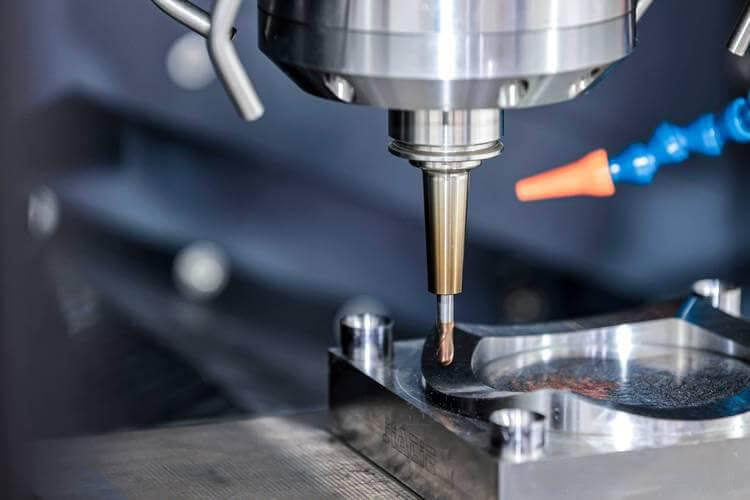
CNC milling is a subtractive manufacturing process where rotating cutting tools remove material from a stationary workpiece.
During milling:
- The workpiece is fixed on the machine table.
- Cutting tools rotate at high speed.
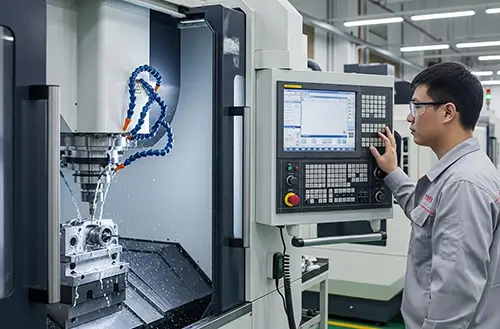
- The CNC controller moves the tool along programmed paths.
- Material is removed to create the final geometry.
CNC milling is ideal for parts with:
- Flat surfaces
- Slots
- Holes
- Pockets
- Complex 3D contours
- Multiple machining features
Common CNC Milling Machine Types
3-Axis CNC Milling
The cutting tool moves along:
- X axis
- Y axis
- Z axis
Suitable for: Plates,Brackets,Simple,housings,Fixtures.
Advantages:
- Lower cost
- High reliability
- Suitable for many applications
4-Axis CNC Milling
Adds rotational movement around one axis.
Advantages:
- Fewer setups
- Machining around multiple sides
- Improved efficiency
Common applications:
- Shafts with side features
- Complex brackets
- Mechanical components
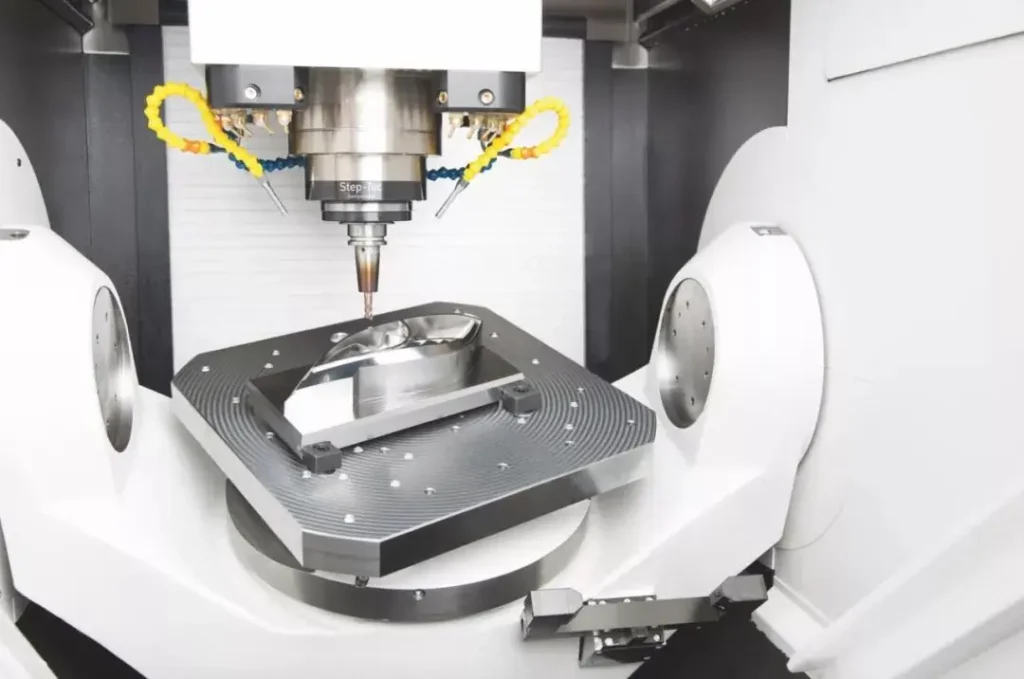
5-Axis CNC Milling
Allows movement along:
- X
- Y
- Z
- Two rotational axes
Advantages:
- Complex geometries
- Reduced fixture changes
- Better surface finish
- Higher accuracy
Applications:
- Aerospace components
- Medical parts
- High-performance automotive components
What Is CNC Turning?
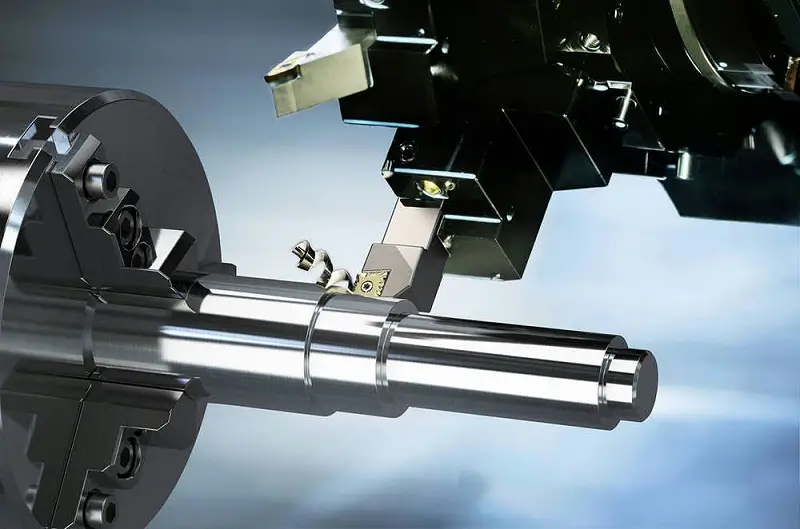
CNC turning is a machining process where the workpiece rotates while cutting tools remove material.
Unlike milling, the cutting tool usually remains stationary while the part spins.
The process is commonly used for cylindrical components.
Typical CNC turning operations include:
- Facing
- Threading
- Grooving
- Drilling
- Boring
- Knurling
Common CNC Turning Parts
CNC turning is suitable for:
Shafts
Examples:Motor shafts,Drive shafts,Precision pins
Bushings and Sleeves
Applications:Mechanical assemblies,Bearings,Industrial equipment
Housings
Examples:Sensor housings,Hydraulic components,Connectors.
Fittings and Connectors
Common industries:Automotive,Aerospace,Fluid systems.
CNC Milling vs CNC Turning: Key Differences
| Feature | CNC Milling | CNC Turning |
|---|---|---|
| Workpiece movement | Fixed | Rotates |
| Cutting tool | Rotates | Usually fixed |
| Best shape | Complex/non-round | Cylindrical |
| Main operation | Material removal by tool movement | Material removal by rotation |
| Typical parts | Brackets, housings, plates | Shafts, bushings, sleeves |
| Geometry complexity | High | Medium |
| Surface capability | Excellent | Excellent |
Which Parts Are Better for CNC Milling?
CNC milling is usually the better choice when a part requires:
Complex Shapes
Examples:
- Curved surfaces
- Multiple pockets
- Irregular profiles
Multiple Features on Different Faces
For example:
An aluminum electronic housing may require:
- Mounting holes
- Internal pockets
- Cable channels
- Surface engraving
CNC milling can complete these operations efficiently.
Non-Rotational Components
Parts such as:
- Brackets
- Plates
- Fixtures
- Machine bases
are typically manufactured using milling.
Which Parts Are Better for CNC Turning?
CNC turning is preferred for rotational components.
Examples:
Cylindrical Parts
- Shafts
- Pins
- Rollers
High-Volume Round Components
Turning is often faster and more economical for repeated cylindrical parts.
Can CNC Milling and Turning Be Combined?
Yes.
Many modern CNC machines combine both processes.
These are called: Mill-Turn CNC machines
They provide:
- Turning capability
- Milling capability
- Drilling
- Live tooling
Advantages:
- Fewer setups
- Better accuracy
- Reduced handling
- Faster production
For complex components, mill-turn machining can significantly improve efficiency.
CNC Milling vs CNC Turning: Cost Comparison
Machining cost depends on:
- Part complexity
- Material
- Machine time
- Tooling
- Quantity
- Tolerance requirements
Generally:
CNC Turning
Often lower cost for:
- Simple cylindrical parts
- Larger quantities
- Standard geometries
CNC Milling
May cost more for:
- Complex shapes
- Multiple setups
- Tight tolerances
However, milling can be more economical when it eliminates assembly operations.
Material Compatibility
Both CNC milling and CNC turning can process many materials.
Aluminum
Popular because of:
- Excellent machinability
- Lightweight properties
- Corrosion resistance
Applications:
- Aerospace parts
- Electronics housings
- Automotive components
Stainless Steel
Used for:
- Medical components
- Industrial parts
- Food equipment
Challenges:
- Higher cutting forces
- Tool wear
Brass and Copper
Used for:
- Electrical components
- Connectors
- Precision fittings
Titanium
Used for:
- Aerospace
- Medical applications
Requires:
- Proper tooling
- Controlled cutting parameters
How Engineers Should Choose Between Milling and Turning
Ask these questions:
1. Is the part mainly cylindrical?
If yes:
→ CNC turning may be the best choice.
Examples:
- Shaft
- Pin
- Sleeve
2. Does the part have complex surfaces?
If yes: CNC milling is likely better.
Examples:
- Housing
- Bracket
- Structural component
3. Are multiple operations required?
Consider: Mill-turn machining
4. What production volume is required?
Prototype:
CNC milling
CNC turning
Low-volume:
- Either process
High-volume:
- Optimize based on geometry
Design Tips for CNC Milling and Turning
For CNC Milling:
Recommended:
✓ Use standard tool sizes
✓ Avoid excessively deep pockets
✓ Add internal corner radii
✓ Reduce unnecessary setups
Avoid:
✗ Extremely thin walls
✗ Deep narrow cavities
For CNC Turning:
Recommended:
✓ Maintain consistent diameters
✓ Avoid excessive length-to-diameter ratios
✓ Use standard thread sizes
Avoid:
✗ Extremely thin shafts
✗ Unnecessary tight tolerances
CNC Milling and Turning Applications
Automotive
CNC Milling:
- Engine brackets
- Mounting plates
- Transmission components
CNC Turning:
- Shafts
- Bushings
- Connectors
Aerospace
CNC Milling:
- Structural brackets
- Lightweight components
CNC Turning:
- Precision pins
- Hydraulic components
Medical
CNC Milling:
- Surgical tools
- Device housings
CNC Turning:
- Screws
- Instruments
- Implant components
Robotics
CNC Milling:
- Robot arms
- Mounting plates
CNC Turning:
- Joints
- Rotating components
Why Choose Xinrico for CNC Machining?
At xinrico, we provide integrated CNC machining solutions including:
✓ CNC milling
✓ CNC turning
✓ Mill-turn machining
✓ Prototype manufacturing
✓ Low-volume production
✓ Precision inspection
Our engineering team helps customers select the most efficient machining process based on:
- Part geometry
- Material requirements
- Production quantity
- Cost targets
Frequently Asked Questions
Is CNC milling better than CNC turning?
Neither process is universally better. The best choice depends on part geometry. Milling is better for complex non-round parts, while turning is better for cylindrical components.
Can one CNC machine do both milling and turning?
Yes. Advanced mill-turn machines combine both processes in one setup.
Which process is cheaper?
Turning is usually more economical for simple cylindrical parts. Milling may be more cost-effective for complex components requiring multiple features.
Can CNC milling and turning produce prototypes?
Yes. Both processes are widely used for prototypes and production parts.
Request a CNC Machining Quote
Need help selecting the right machining process for your part?
Send us your CAD drawing or 3D model. Our engineers can review your design, recommend the best manufacturing approach, and provide a competitive CNC machining solution.
Contact xinrico today for CNC milling and CNC turning services.